
Discharge decisions may contribute to the significant healthcare challenges associated with sepsis. Though sepsis patients are often discharged to skilled nursing facilities (SNFs), data demonstrates that transitioning patients to long-term acute care hospitals (LTACHs), which provide continued acute care for critically complex patients, can reduce readmissions and overall cost to hospitals and payors.
Understanding the Cost of Sepsis
- Sepsis is the most expensive inpatient condition, in part because the average length of stay is 75% greater for sepsis than for other conditions.2
- Sepsis is among the top 5 most expensive conditions billed to private insurance.3
- Across all payor groups, sepsis is the condition with the greatest number of 30-day all-cause adult readmissions.4
Reducing Readmissions and Costs with LTACH Utilization
Transfer to post-acute or specialized care providers can reduce long and costly hospital stays. However, recovery pathway decisions, which have historically favored SNFs, can also impact outcomes and cost.5
A recent case study of sepsis episodes at LTACHs and SNFs in Las Vegas found that utilization of LTACHs yielded cost savings, primarily through reduced readmissions. Cost savings were even greater at Kindred LTACHs.6
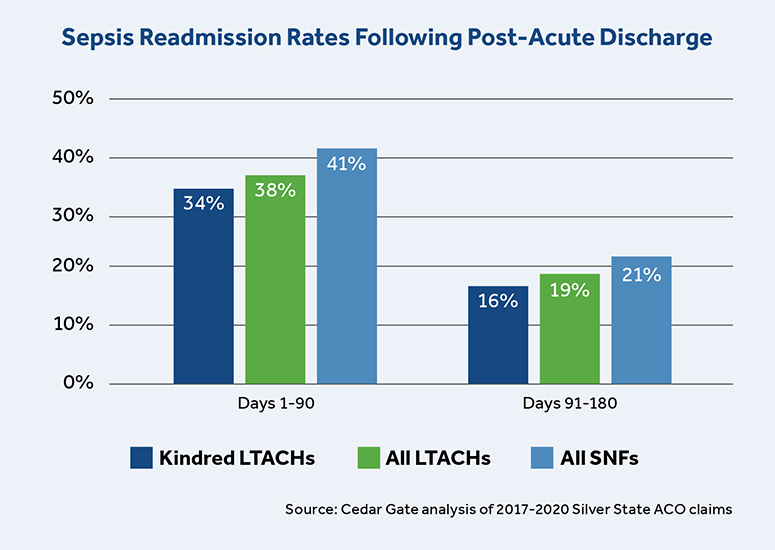
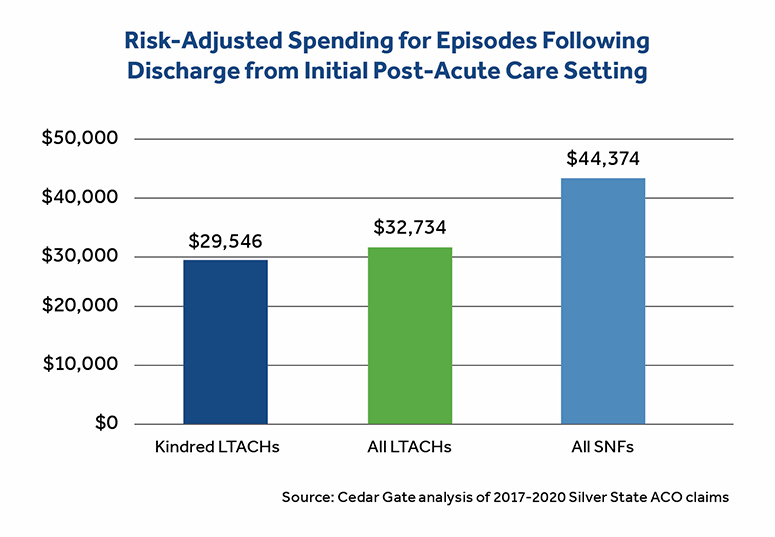
It is important for sepsis patients to continue to receive an acute level of care after the initial hospital stay. At LTACHs, teams of physicians, critical care clinicians, and rehabilitation therapists specialize in treating critically ill patients with complex conditions who require extended recovery times.
How Kindred Hospitals Improves Sepsis Outcomes
Kindred Hospitals, many of which have earned Joint Commission Certification in Sepsis, have robust treatment programs that allow them to help reduce readmissions. These programs include:
- Nurse-driven screening protocol for sepsis order sets, integrated into the electronic medical record (EMR)
- Sepsis tests and treatments that follow the Surviving Sepsis Campaign
- The ability to administer and titrate IV antibiotics
- Onsite pharmacies and laboratory access
- Multidisciplinary collaboration that ensures a comprehensive approach to sepsis treatment, including providing mechanical ventilation, wound care, dialysis, and nutrition support to address complications.
Ensuring sepsis patients have access to a setting with this level of acuity in a timely manner can help reduce sepsis readmissions and overall cost.
To learn more about how Kindred Hospitals can reduce sepsis costs, visit kindredmanagedcare.com.
References
- https://www.ncbi.nlm.nih.gov/books/NBK573113/ , Figure 1
- https://journals.lww.com/ccmjournal/Fulltext/2018/12000/Epidemiology_and_Costs_of_Sepsis_in_the_United.1.aspx
- https://hcup-us.ahrq.gov/reports/statbriefs/sb204-Most-Expensive-Hospital-Conditions.jsp
- https://www.hcup-us.ahrq.gov/reports/statbriefs/sb278-Conditions-Frequent-Readmissions-By-Payer-2018.pdf , Figure 2
- https://www.atsjournals.org/doi/full/10.1513/AnnalsATS.201905-368RL
- https://atiadvisory.com/wp-content/uploads/2022/02/Long-Term-Acute-Care-LTAC-Hospitals-as-Part-of-the-Value-Based-Solution.pdf , Figures 5, 6
