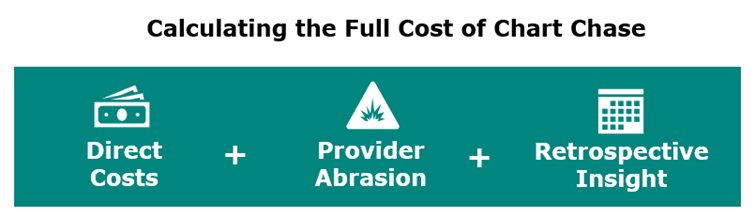
Now is past time for health plans to rethink how to marshal the clinical data needed to accurately report the future risk or care needs of their members. Today, most Medicare Advantage plans start this process every year with retrospective claims analysis and then ask treating providers to pull medical charts for an overwhelming share of members to document suspected diagnoses. This costly, burdensome process is unsustainable amid mounting pressure on healthcare quality and resources.
And yet, it is on course to grow in response to recent changes in the CMS program for verifying provider documentation of submitted diagnoses, known as RADV audits. For example, CMS has increased the number of plans subject to these audits from roughly 60 contracts per cycle to all 550+ Medicare Advantage contracts. Additionally, the sample size per audit has increased by up to 714%, and CMS is now initiating new rounds of audits approximately every three months to address a multi-year backlog.
AI offers compelling opportunities for streamlining current processes for capturing needed clinical data. More specifically, health plan leaders are deploying AI to automate the linkage of evidence in retrieved charts to member diagnoses, but this improvement only addresses the second step in what must be a two-step process. It does not streamline the bigger and more burdensome challenge of how plans acquire these charts.
Fortunately, most plans are already well on their way to a solution for this critical first step. Plan systems now automatically ingest electronic documents known as C-CDA documents to facilitate care coordination and patient-centered care. These electronic feeds also include the information required for CMS audits, namely time-stamped medical records and notes from a face-to-face encounter that are signed by the treating provider. Indeed, providers now commonly respond to chart-chase requests by re-sending a C-CDA document already in the plan’s clinical data repository.
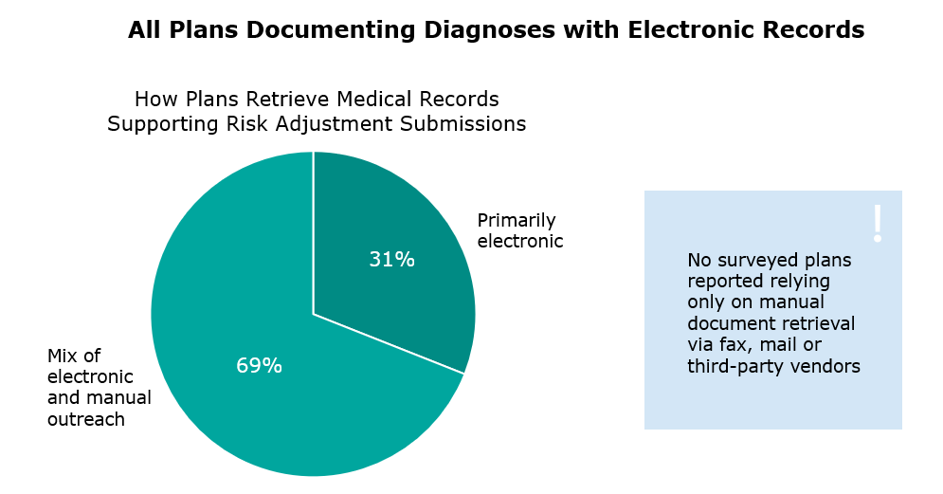
Recent expansion of CMS RADV audits should not be used as justification for greater reliance on chart chase but rather as a catalyst for rethinking this now dated process. Many of the technical pieces are already in place for plans to stop chasing charts to document diagnoses for risk adjustment. Plans must now ensure that managers overseeing risk adjustment and coding are fully aware of the breadth of clinical data already captured in their systems, and data and interoperability leaders must enable their risk adjustment and coding peers to act on this information.
To learn more about this clinical-data-first approach to risk adjustment, listen to the InterSystems Webinar on [Stop Chasing Charts for Risk Adjustment].
At the Becker's 5th Annual Fall Payer Issues Roundtable, taking place November 2–3 in Chicago, payer executives and healthcare leaders will come together to discuss value-based care, regulatory changes, cost management strategies and innovations shaping the future of payer-provider collaboration. Apply for complimentary registration now.