Executive Summary
Payer-provider contracts are the backbone of financial and operational efficiency in the U.S. healthcare ecosystem. Seemingly straightforward, a payer-provider contract is the legal agreement between a healthcare payer and a provider that outlines the terms for delivering and reimbursing healthcare services. But despite a contract’s strategic importance, current processes are burdened by manual workflows and limited accessibility, both informational and technological. This paper outlines the challenges in Contract Lifecycle Management (CLM), highlights areas where AI can unlock efficiency, and offers a vision for modernizing the entire provider contracting process.
The Current Landscape: Manual and Fragmented
Health plans spend $280B+ annually on administration, with an estimated $20–23B directly on provider contracting.
Key cost drivers include:
- Legal/contracting staff
- Fragmented documentation systems
- Manual contract redlining and negotiations
- Network adequacy analytics
- Ongoing credentialing and compliance audits
Nationwide, inefficiencies in contracting are estimated to cost the system $40–60B, underscoring a clear opportunity for transformation.
The Current State of CLM Tools
CLM tools have long promised to streamline the creation, approval, storage, and retrieval of contracts. Most enterprise CLM tools in the market today offer a similar suite of baseline capabilities:
- Centralized digital contract repositories
- Version control and audit trails
- Template-driven contract generation
- E-signature integration
- Workflow automation for approvals and renewals
- Basic search and tagging functionalities
These tools focus largely on administrative tasks — optimizing document management, not contract intelligence. When it comes to provider contracts, the limitations become especially apparent.
The Gaps – What’s Still Manual, Error-Prone, and Expensive
Despite digital storage and workflow automation, many critical aspects of contract management remain manual or require human oversight, including:
- Pricing Configuration for Claims Adjudication: Accurately configuring pricing terms into claims systems.
- Contract Language Compliance Audits: Reviewing contracts for regulatory or compliance requirements (e.g., non-discrimination language).
- Reconciliation Across Multiple Documents: Reconciling contract terms with other documents (e.g., provider manuals) that are often stored in disparate systems.
The Financial and Compliance Burden of Manual Processes
The impact of these gaps manifests in several costly ways:
- Financial Leakage: Misconfigured pricing in claims systems results in delayed or incorrect payments, leading to administrative burdens and provider abrasion.
- Compliance Risk: Inability to quickly locate or verify required language across thousands of contracts increases audit exposure and regulatory fines.
- Operational Inefficiencies/Opportunity Cost: Contracting teams spend the majority of their time on low-value administrative work instead of working at the top of their license, slowing down negotiation and onboarding.
AI-Powered CLM — A Strategic Enabler
AI is revolutionizing contract lifecycle management in healthcare—not by simply digitizing workflows, but also by embedding intelligence into every stage of the process. This shift transforms contracts from static documents into dynamic sources of operational, financial, and strategic insight.
1. AI-Driven Contract Review
- NLP-Based Clause Extraction: Automatically identify and classify key clauses for immediate review.
- Detection of Non-Standard Terms: Flag language that deviates from accepted norms, reducing legal risk.
- Language Benchmarking: Compare clauses to PADU or historical norms to assess contract favorability and ensure consistency and compliance.
2. Workflow Automation
- Real-Time Alerts: Notify stakeholders of upcoming renewals and deadlines, delays, or missing approvals.
- Auto-Renewal Workflows: Trigger renewal processes tied to compliance checks, ensuring proactive management of contract lifecycles.
3. Centralized Repository + Advanced Search
- OCR-Enabled Ingestion: Convert PDFs and scanned documents into searchable, structured data.
- Metadata-Based Search: Search across contracts using attributes like provider name, type, TIN, or reimbursement model.
4. Analytics & Compliance Dashboards
- Network Adequacy Modeling: Simulate the impact of contract changes on provider coverage and access.
- Obligation Tracking: Track credentialing deadlines, audit dates, and other time-sensitive requirements across contracts.
5. Healthcare-Specific Features
- Provider Directory Sync: Ensure contract data remains aligned with NPI, TIN, and specialty records.
- Delegated Entity Monitoring: Automatically flag non-compliance among delegated entities.
- PCP Reassignment & Offboarding Automation: Streamline transitions when providers leave or change roles.
- CMS/NCQA Clause Mapping: Ensure contracts meet federal and accreditation standards with built-in compliance checks.
HiLabs – Leading the Future of Provider Contract Intelligence
At HiLabs, we are not applying generic AI models to provider contracts; we are building bespoke AI models trained specifically on healthcare documents. Purpose-built models allow payers to extract insights like a human and automate downstream tasks – from pricing configuration in claims systems to compliance validation.
Our six-step process sets HiLabs ContractsAI apart:
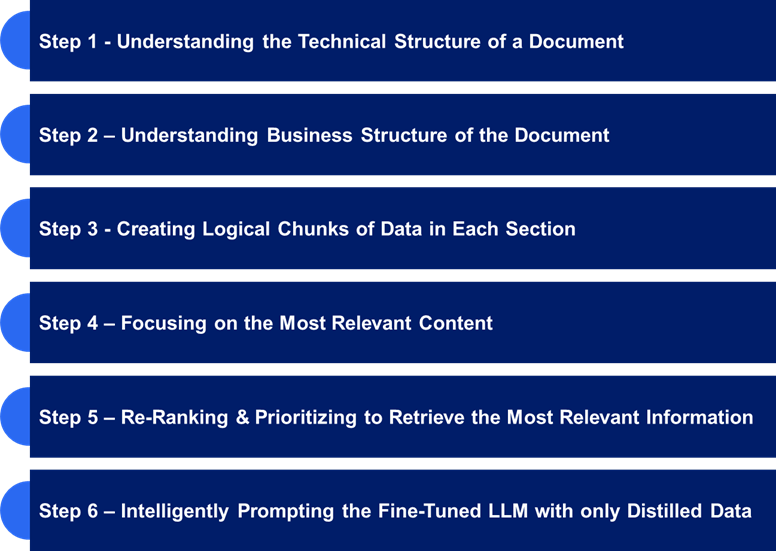
As AI-powered CLM shifts the paradigm from static contract storage to intelligent contract management, HiLabs is empowering health plans with true contract intelligence, unlocking financial value, reducing risk, and enabling strategic transformation across their provider networks.
Learn more about the HiLabs ContractsAI solution
At the Becker's 5th Annual Fall Payer Issues Roundtable, taking place November 2–3 in Chicago, payer executives and healthcare leaders will come together to discuss value-based care, regulatory changes, cost management strategies and innovations shaping the future of payer-provider collaboration. Apply for complimentary registration now.